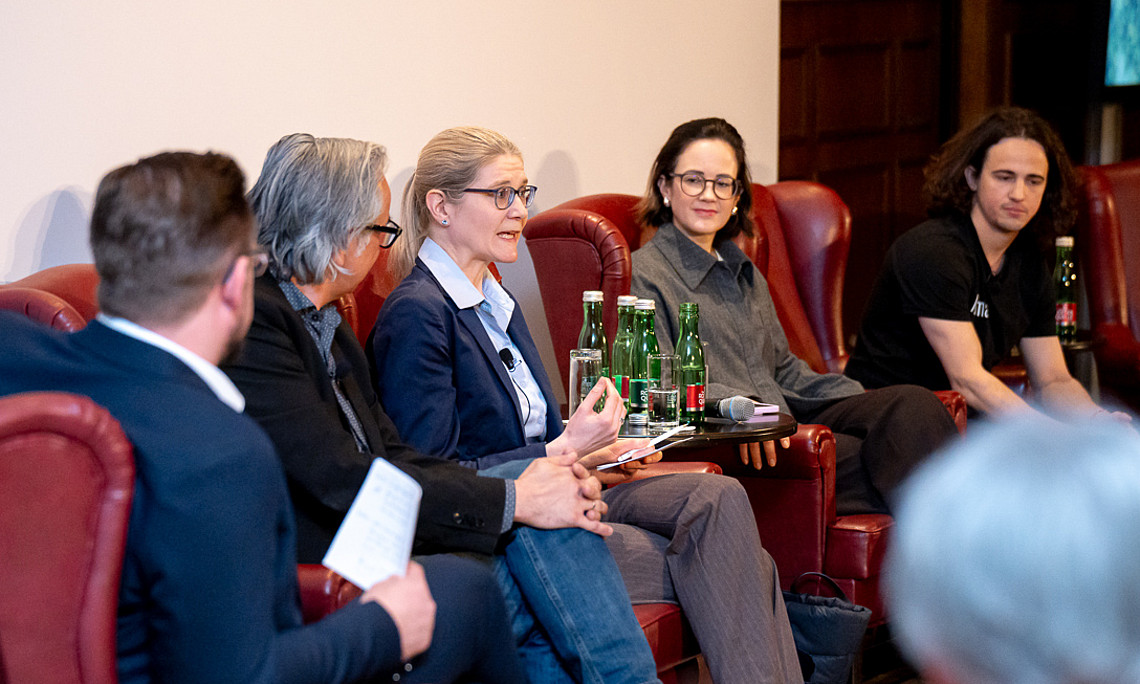
Social network analysis reveals interpersonal relationships and interactions, thereby providing valuable insights for research into human behavior and the motivations behind it. The eighth European Conference on Social Networks brings together researchers in this field to promote exchange and innovation. It was organized by the Institute for Analytical Sociology (IAS) in collaboration with the Swedish Excellence Centre for Computational Social Science (SweCSS).
On the first day of the conference, Antonia Knapp took part in a workshop led by Elisa Bellotti on the use of social network analysis as a research method.
The second day began with a keynote speech by Andreas Flache on the use of agent-based modelling to analyse social networks. He presented two case studies in which agent-based modelling was used as a complementary tool in the research process to combine micro- and macro-sociological perspectives.
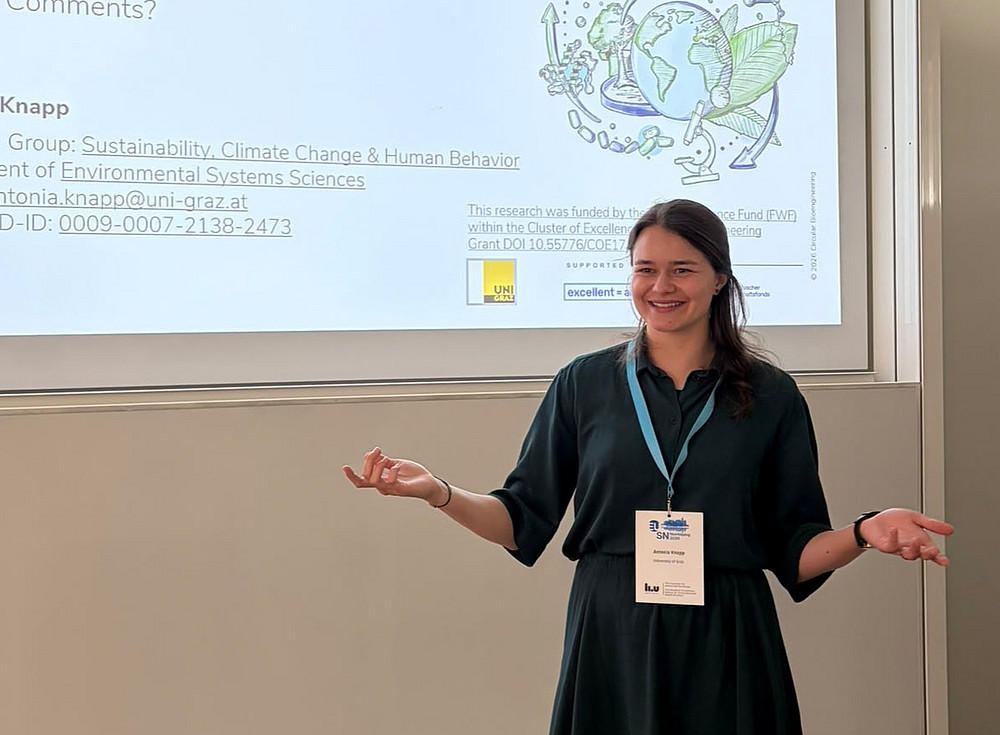
During the presentation sessions, Antonia Knapp presented her and Hermine Mitters’ current research as part of the Cluster of Excellence – Circular Bioengineering, under the title ‘Exploring the social dimension of an Austrian biorefinery using mixed methods for social network analysis’.
Biorefineries make a significant contribution to reducing greenhouse gas emissions from fossil-based materials, as they use renewable raw materials as their feedstock. Through the production of bio-based fuels, chemicals, materials, and substances, they are effectively driving the transition to a fossil-free future. By analysing the circumstances and impacts of biorefineries using social network analysis, current research is supplemented with a social science perspective. The innovation potential and the impacts on the regions and populations where biorefineries are located are discussed. For the time being, Hermine Mitter and Antonia Knapp are focusing on biorefineries in Austria.
The conference programme was rounded off by a meeting of the Early and Middle Career Researchers on Social Networks (EMCRs), a guided tour of Norrköping and a group dinner. The focus here was on exchanging ideas and exploring potential collaboration with other researchers working in the field of social networks.
Further information about the event is available on the conference’s official website.