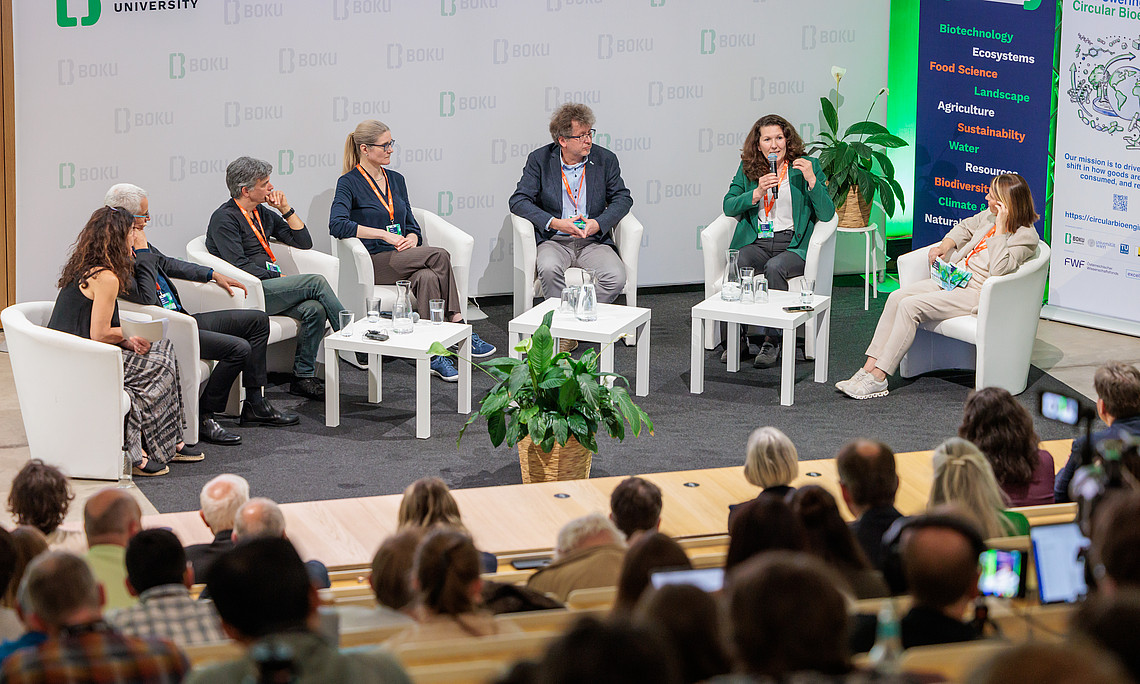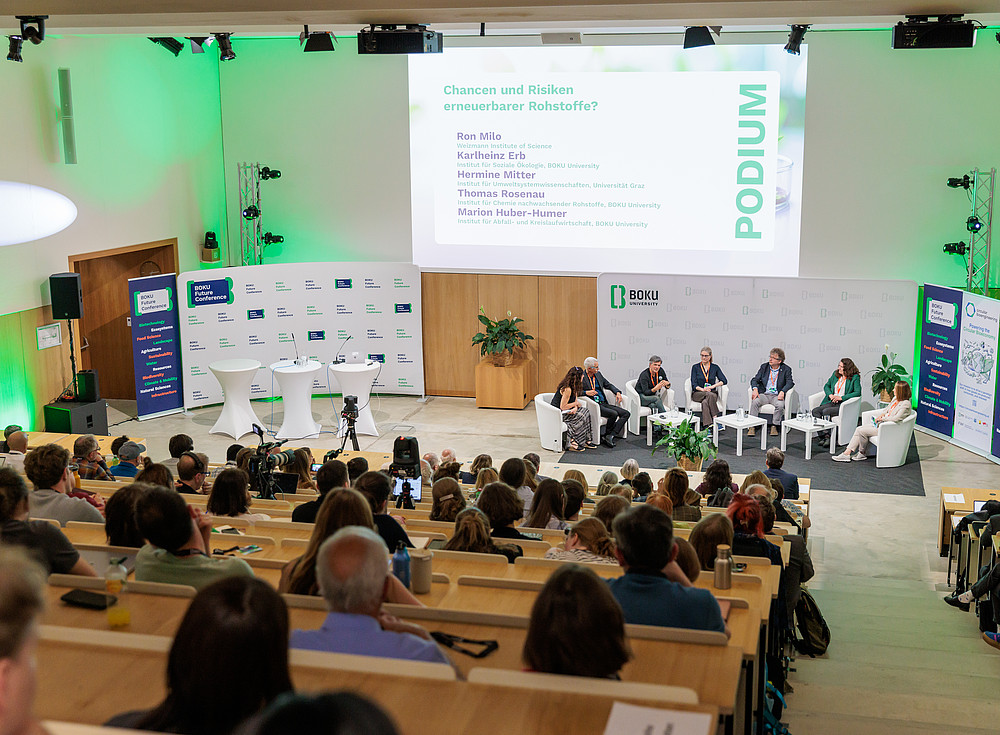
The theme of this year’s Future Conference at BOKU centered on the Cluster of Excellence - Circular Bioengineering. “No Waste: How Bioengineering Closes the Loop” represents the cluster’s vision of sustainable bioeconomy. Drawing on the expertise of five Austrian universities, the cluster aims to drive innovation and explore pathways to a sustainable circular economy in close cooperation with industry partners. As part of the FWF’s “excellent=austria” program, the cluster stands for outstanding interdisciplinary research.
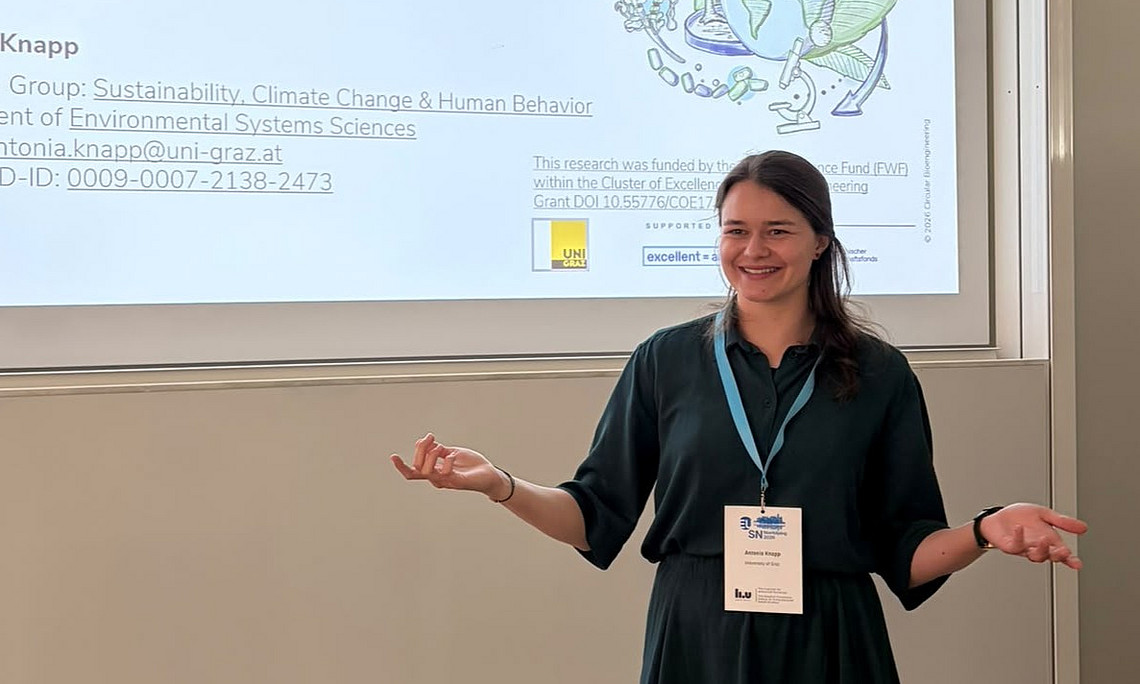
In addition to various presentations and panel discussions, many researchers on site represented the cluster. The event program was developed largely in cooperation with the cluster. The cluster’s annual meeting took place over the following two days, with Hermine Mitter and Antonia Knapp from SCCHuB also contributing.
In the article “Kreislaufwirtschaft zwischen Labor und Raffinerie,” the cluster’s research director, Roland Ludwig, discusses the current challenges of the transition to a circular economy. He is certain of the importance of the social dimension: “We need people to do this – and we don’t even have enough people who can handle it yet.” Tristan Horx, who in his keynote address called for “furious optimism” in the face of so many crises, cites the lack of science journalism that inspires people as another challenge.
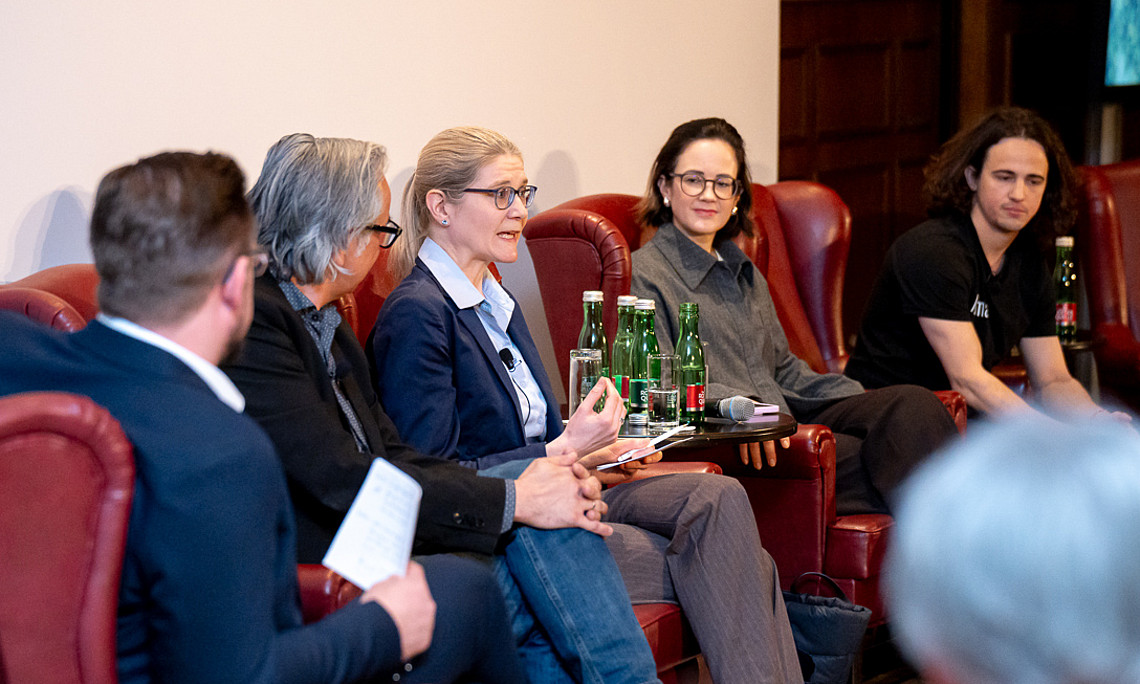
In his keynote address on “Opportunities and Risks of Renewable Raw Materials,” Ron Milo highlighted the urgency of change by pointing to the steadily growing, human-influenced biomass. This biomass already exceeds the Earth’s natural biomass. An innovative solution is being developed under Milo’s leadership in the Weizmann Institute’s laboratory: After decades of experimentation, researchers have succeeded in cultivating E. coli bacteria that absorb carbon dioxide, produce sugar, and can thus grow sustainably on carbon dioxide. If scaled up, this could be of great benefit, as carbon dioxide plays a significant role in the greenhouse effect.
Antonia Knapp, doctoral candidate for the SCCHuB research group, and Hermine Mitter, research group leader, are conducting research on the social sustainability dimension of biorefineries. In collaboration with researchers from the five other universities in the cluster, various sustainability aspects of biorefineries are being examined. Of particular interest are the barriers and potential drivers for improving the social aspects of biorefineries.
To the BOKU magazine.