Begin of page section:
Page sections:

  • Go to contents (Accesskey 1)
  • Go to position marker (Accesskey 2)
  • Go to main navigation (Accesskey 3)
  • Go to sub navigation (Accesskey 4)
  • Go to additional information (Accesskey 5)
  • Go to page settings (user/language) (Accesskey 8)
  • Go to search (Accesskey 9)

End of this page section. Go to overview of page sections

Begin of page section:
Page settings:

English en
Deutsch de
Search
Login

End of this page section. Go to overview of page sections

Begin of page section:
Search:

Search for details about Uni Graz
Close

End of this page section. Go to overview of page sections


Search

Begin of page section:
Main navigation:

Page navigation:

  • University

    University
    • About the University
    • Organisation
    • Faculties
    • Library
    • Working at University of Graz
    • Campus
    Developing solutions for the world of tomorrow - that is our mission. Our students and our researchers take on the great challenges of society and carry the knowledge out.
  • Research Profile

    Research Profile
    • Our Expertise
    • Research Questions
    • Research Portal
    • Promoting Research
    • Research Transfer
    • Ethics in Research
    • Commission for Scientific Integrity
    Scientific excellence and the courage to break new ground. Research at the University of Graz creates the foundations for making the future worth living.
  • Studies

    Studies
    • Prospective Students
    • Students
    • Registration for Study Programme (Winter semester 2026/27)
    • Welcome Weeks for First Year Students
  • Community

    Community
    • International
    • Location
    • Research and Business
    • Alumni
    The University of Graz is a hub for international research and brings together scientists and business experts. Moreover, it fosters the exchange and cooperation in study and teaching.
Topics
  • Sustainable University
  • Researchers answer
  • Work for us
Close menu

End of this page section. Go to overview of page sections

Begin of page section:
You are here:

University of Graz SCCHuB - Sustainability, Climate Change and Human Behaviour News KlimaLecture: What does the future of European climate policy look like?
  • About us
  • Research
  • Student Services
  • News
  • Events

End of this page section. Go to overview of page sections

Friday, 13 June 2025

KlimaLecture: What does the future of European climate policy look like?

Logo der Jungen Akademie ©Die Junge Akademie
©Die Junge Akademie

Hermine Mitter gave a lecture at the eleventh Climate Lecture of the Junge Akademie on May 27, 2025. For the first time, active members of five young academies in Europe cooperated under the direction of Linus Mattauch to discuss the current state of European climate policy.

This summer, the EU institutions will debate how greenhouse gas emissions can be reduced by 90% by 2040 compared to 1990 levels. In her presentation, Hermine Mitter discussed the possible effects of this decarbonization target for Austria. Specifically, she presented four scenarios that were developed together with stakeholders in the NetZero2040 research project. All four scenarios follow the emissions reduction path to 2040 and differ in terms of final energy demand and import shares of energy sources.

Three key results emerge for Austria:

  1. Final energy consumption decreases in all scenarios. The main reasons for this are the electrification of mobility and space heating as well as measures on the demand side, such as reducing the number of kilometers driven.
  2. The structure of the energy system changes fundamentally in all scenarios. This includes a rapid expansion of electricity generation from renewable energy sources with a simultaneous, drastic reduction in the use of fossil fuels.
  3. The speed with which the energy system must be changed in order to become climate-neutral is unprecedented. Both photovoltaics and wind power must be expanded faster in absolute terms than was the case with hydropower, wind power or natural gas in the past.

This makes it clear once again that business, politics, society and science must all be equally committed to achieving the climate neutrality target by 2040.
To the recording of the event

To the event on the Junge Akademie website

Related news

Circular Bioengineering – Everything about Stable Cycles in BOKU Magazine

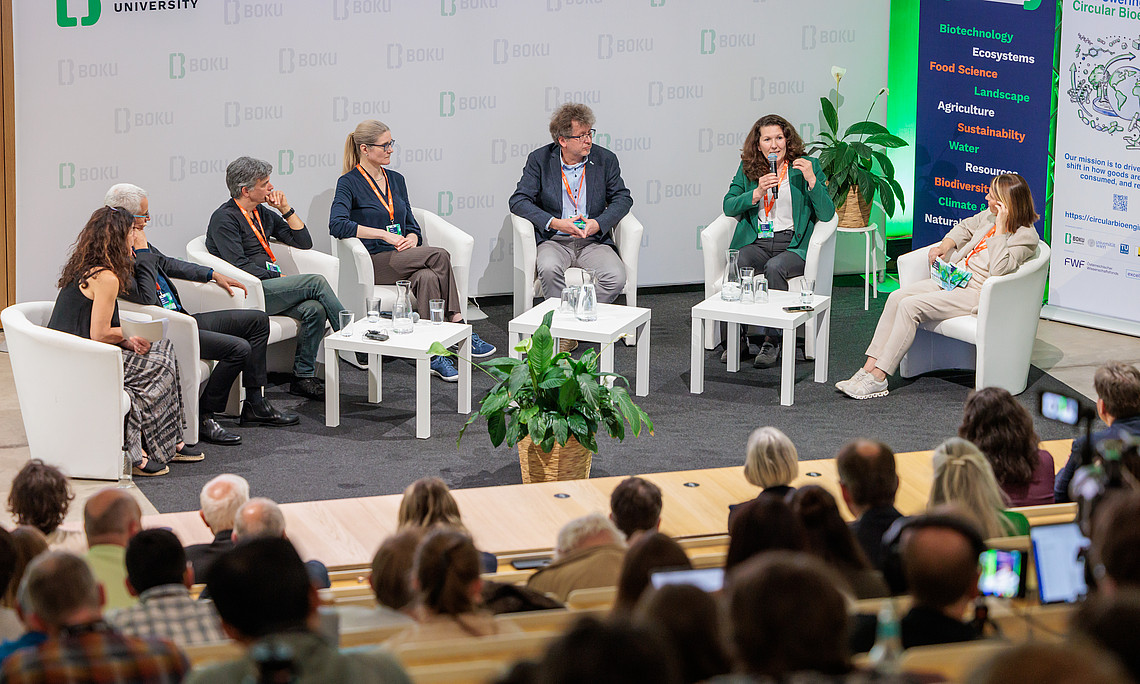
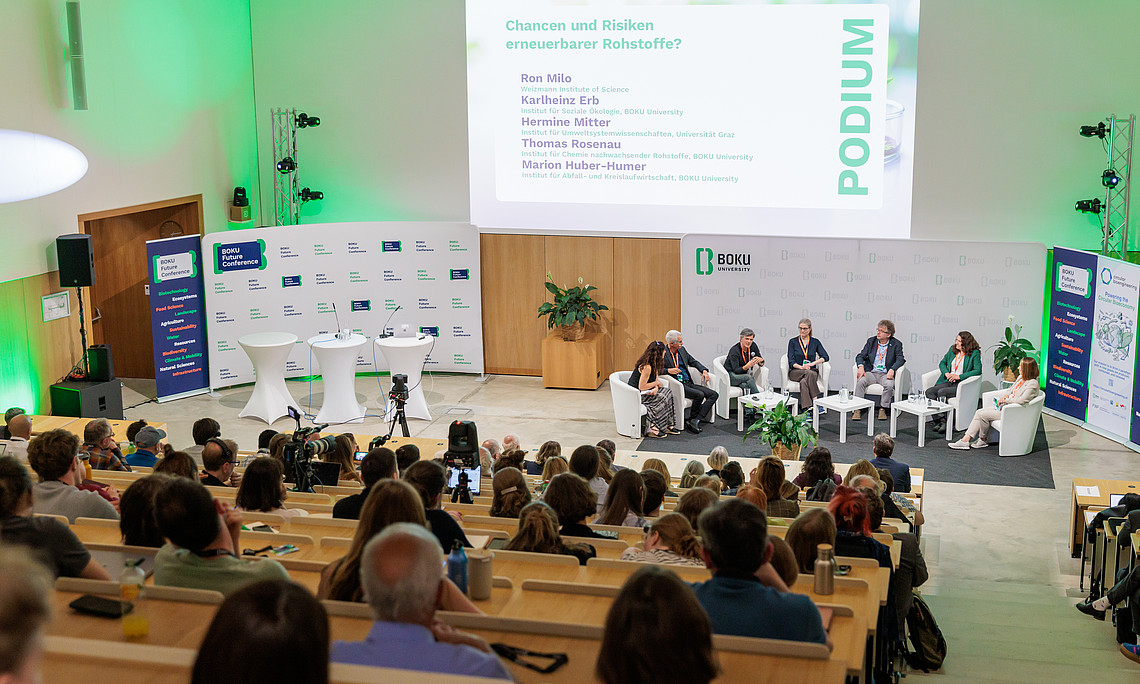
The latest issue of BOKU Magazine highlights the key areas of focus of the Cluster of Excellence - Circular Bioengineering. In addition to a discussion with Hermine Mitter on “Opportunities and Risks of Renewable Raw Materials,” the issue features other topics related to BOKU’s Future Conference, themed “No Waste: How Bioengineering Closes the Loop.”

BOKU Future Conference

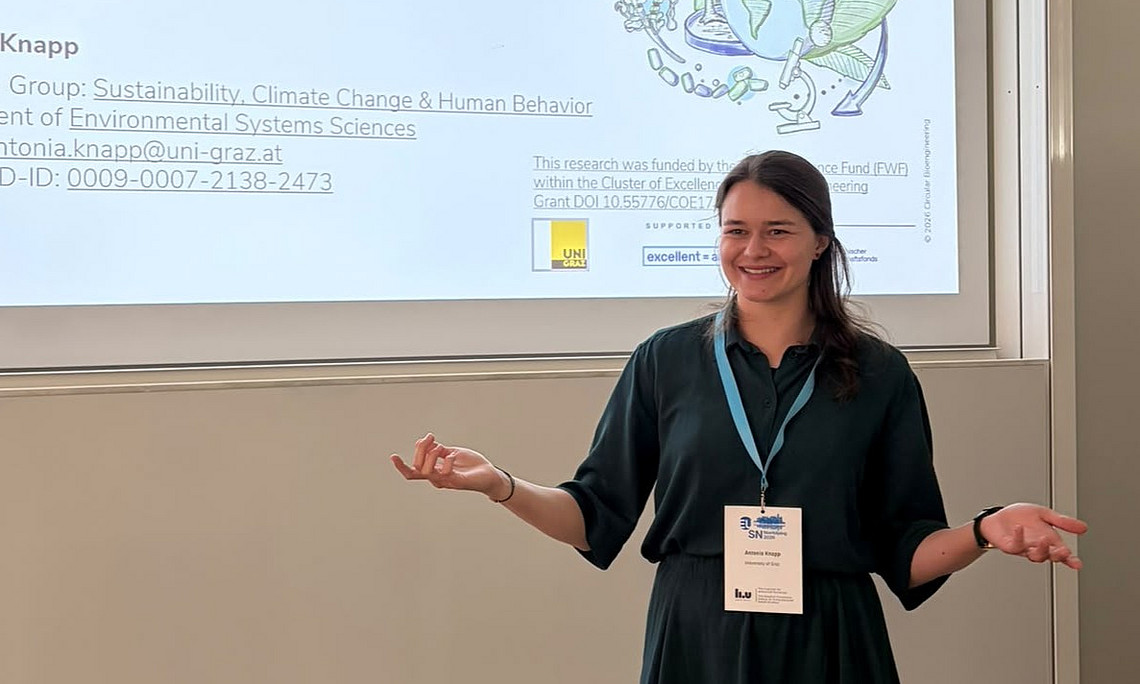
Under the theme “NO WASTE: How Bioengineering Closes Loops”, the Future Conference took place on 20 May at the University of Natural Resources and Life Sciences, Vienna (BOKU). The SCCHuB was represented at the event by Professor Hermine Mitter and PhD researcher Antonia Knapp, as the “Cluster of Excellence – Circular Bioengineering” organised the Future Conference.

Discussion: Ecological transformation as a driver of prosperity

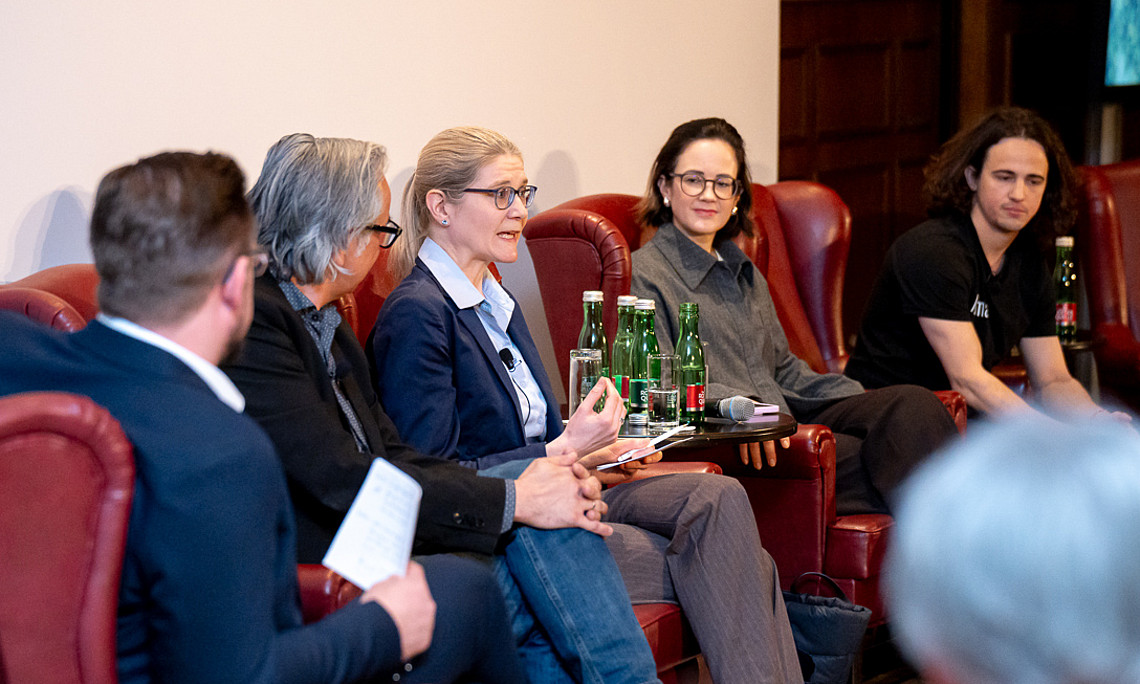
Under the title “Ein Klimaplan für Österreich - ökologische Transformation als Wohlstandstreiber”, a Club20 panel discussion took place at the Intercontinental Hotel in Vienna on 18 March 2026. Hermine Mitter was one of the experts discussing strategies for effective climate policy in Austria.

Reinforcement for our research group

Valentin Zanon has been pursuing his doctoral studies in our research group since October 2025. As part of the Cross-Sec research project, he will work with stakeholders on scenarios for achieving climate neutrality in Austria by 2040.

Begin of page section:
Additional information:

University of Graz
Universitaetsplatz 3
8010 Graz
Austria
  • Contact
  • Web Editors
  • Moodle
  • UNIGRAZonline
  • Imprint
  • Data Protection Declaration
  • Accessibility Declaration
Weatherstation
Uni Graz

End of this page section. Go to overview of page sections

End of this page section. Go to overview of page sections

Begin of page section:

End of this page section. Go to overview of page sections